WALK-IN ASSIST
A full room does not always mean there is no table.
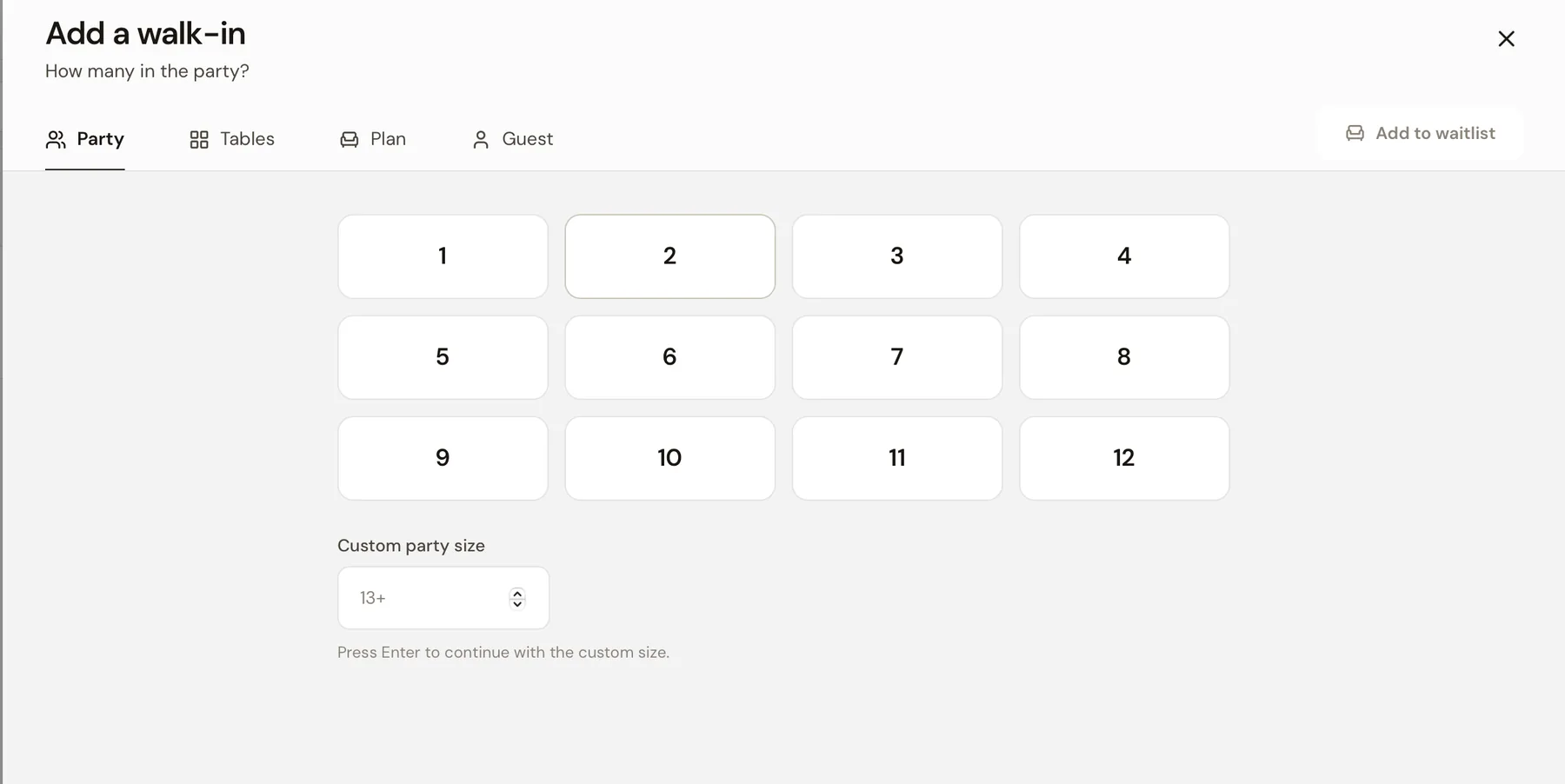
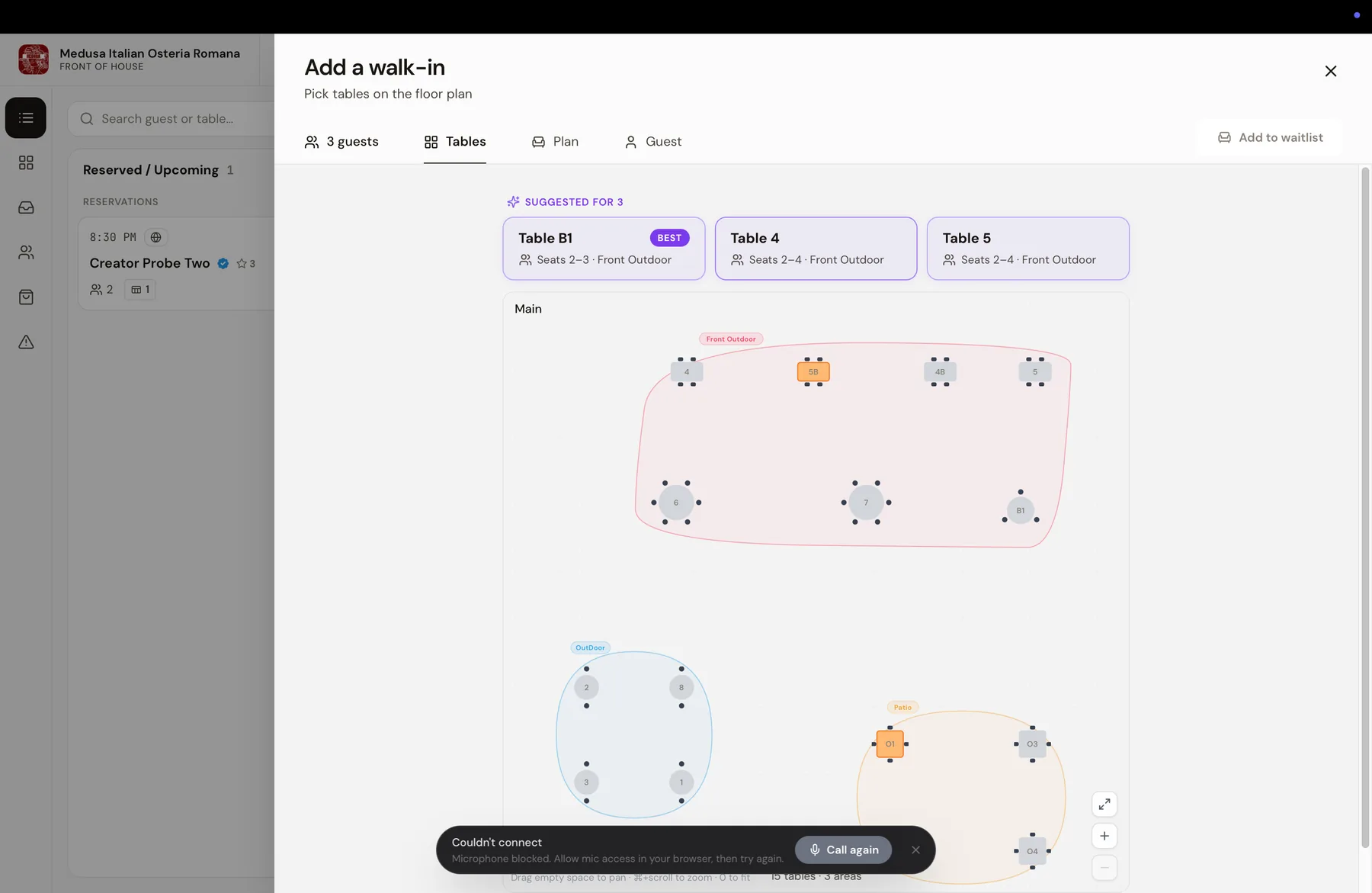
Walk-In Assist is Fork Time's seating decision tool for walk-ins, built for the moment a party arrives and the floor looks full. When a party arrives, Fork Time tests every table and combination on the live floor and ranks the three best options, drawn from four types: seat the party now, combine two tables, quote an accurate wait, or offer a table for a defined window before its next reservation. Each option shows the timing and the conditions attached to it, so the host can give the guest a real answer instead of turning them away. Your team makes the final choice and manual seating is always available. Walk-In Assist works from the same live book as reservations, so a table offered to a walk-in cannot collide with a booking. It is included on every Fork Time plan from $99 a month.
PHANTOM CAPACITY
Phantom capacity is seating that genuinely exists but cannot be found in the moment a guest is standing at the door. Most "sorry, we're full" is phantom capacity rather than a capacity fact.
A table may open in twenty minutes. Two tables may combine. A table may be free for an hour before its next booking. All three can be true at once. During service, no host can hold the whole floor plan, every turn time and every upcoming reservation in their head while a party of five waits at the door.
So the room has space, the answer is still no, and a table that could have been sold sits empty for another twenty minutes. The problem is arithmetic under time pressure, not attitude.
HOW IT WORKS
When a walk-in arrives, Fork Time checks every table and every valid combination against the live book, then ranks the three best options with the timing and conditions on each. The host sees what each option actually means: seat now, combine, an accurate wait, or a defined dining window that ends before the next reservation.
Your host chooses. Manual seating remains available at all times, and the choice is recorded so quoted waits can be compared against actual ones.
WHEN THE PARTY CHANGES
Bookings do not stay the shape they were made in. A party of four becomes five on the way in. Someone arrives an hour after the rest. A table that has just sat down wants to add a friend who is parking the car.
None of that is a scheduling problem in the way software usually understands it. It is a judgement call made by whoever is standing there: whether the table can physically take another chair, whether the kitchen can absorb another main this late in the service, whether the neighbouring table will mind.
Fork Time does the part a system is better at. It checks whether the table can take the extra cover against your seating rules, whether the next reservation on that table still works, and what the alternatives are if it does not. Then it hands the decision back.
Your host has the eyes. They can see that the four-top is fine with five because two of them are children, or that the table behind is mid-course and the chair would block the run. Software cannot see any of that, and a system that overrode a host on it would be worse than useless.
HONEST WAITS
A wait quoted from the live floor is a wait you can keep. Guests who are told twenty minutes and seated in twenty minutes stay. Guests told twenty and seated in forty do not come back, which is why quoted-against-actual is worth tracking from the first week.
The research is blunt about how much this matters. Reputation specialist Feed It Back found speed of service was the single biggest driver of negative restaurant feedback, accounting for 20% of it. Queueing research also finds that guests who are not kept informed estimate their wait as considerably longer than it actually was, so an accurate quote does not only manage the expectation, it shortens the experience.
BEST FOR
Full-service restaurants with real walk-in demand. Venues with flexible floor plans and combinable tables. Rooms that fill early and currently turn parties away during the busiest hour.